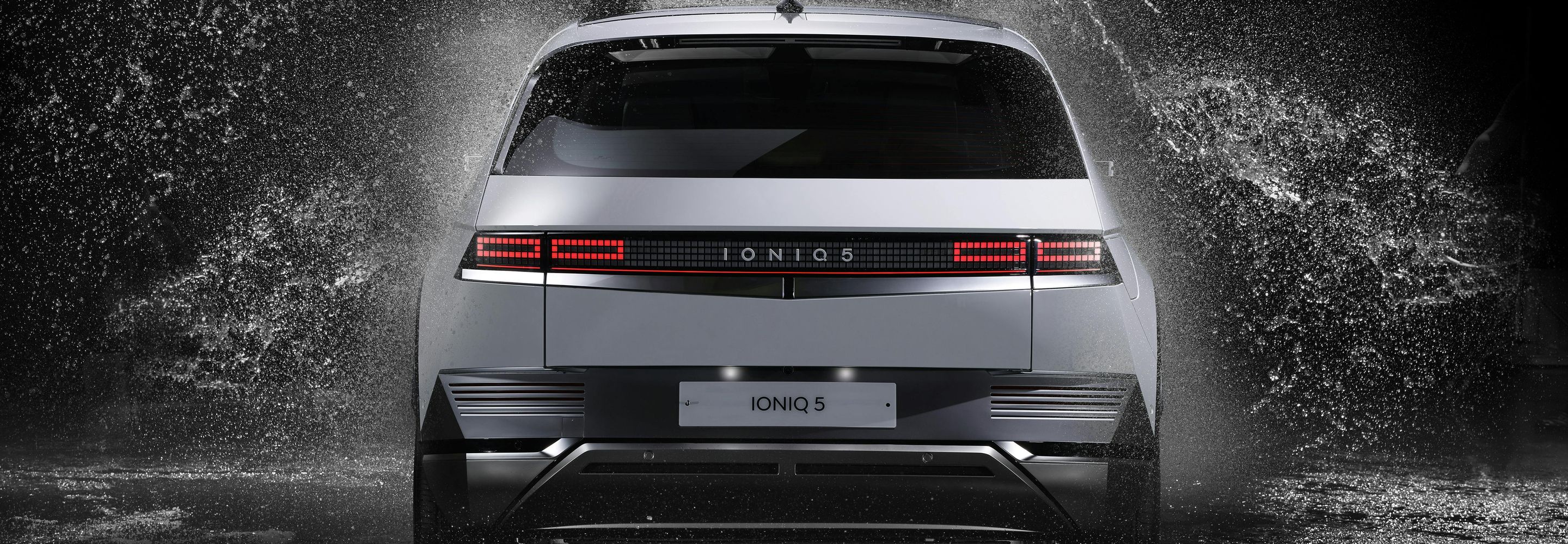
The within proposed automotive defect multi-jurisdictional class proceeding involves certain model and model year Hyundai-, Genesis- and Kia-brand Electric Vehicles (“EVs”), defined below as “Affected Class Vehicles”, engineered, designed, developed, manufactured, assembled, tested, marketed, distributed, supplied, leased and/or sold by the Defendants, Hyundai Auto Canada Corp. (“HACC”), Hyundai Motor Company (“HMC”), Hyundai Motor America, Inc. (“HMA”), Hyundai Motor Manufacturing Alabama LLC (“HMMA”), Kia Canada Inc. (“KCI”), Kia Motors Corporation (“KMC”), Kia Motors America, Inc. (“KMA”), and Kia Georgia, Inc. (“KGI”), in Canada, including the Province of British Columbia, equipped with a charging port containing a defect in its design and/or manufacturing that causes overheating during Level 2 alternating current charging, which poses a real, substantial, and imminent risk of harm, including potential melting of charging components, electrical damage, and fire. (the “Charging Defect”).
“Affected Class Vehicles” include, but are not limited to, the following model year Hyundai-, Genesis-, and Kia-brand EVs designed, manufactured and/or assembled by the Defendants, HMC, HMMA, KMC, and/or KGI, and marketed, advertised, distributed, sold and/or leased by the Defendants, HACC, HMC, HMA, KCI, KMC and/or KMA, in Canada, including the Province of British Columbia, with the Charging Defect:
HYUNDAI & KIA MODEL
Genesis G80v (2023-2024)
Genesis GV60 (2023-2024)
Genesis GV70 (2023-2025)
Hyundai IONIQ 5 (2022-2024)
Hyundai IONIQ 6 (2023-2025)
Kia EV6 (2022-2024)
This action is brought on behalf of members of a class consisting of the Plaintiff, and all other persons and legal entities resident in Canada, who own, owned, lease and/or leased any one or more of the Affected Class Vehicles (“Class” or “Class Members”), excluding employees, officers, directors, agents of the Defendants and their family members, class counsel, presiding judges and any person who has commenced an individual proceeding against or delivered a release to the Defendants concerning the subject of this proceeding, or such other class definition or class period as the Court may ultimately decide on the application for certification.
The Affected Class Vehicles can recharge their batteries at a variety of currents at home, ranging from 6 to 48 amps. A 240V Level 2 AC charger charging at 48 amps should result in a fully charged vehicle in about seven hours. Under normal and advertised operating conditions, 240V Level 2 AC charging at 48 amps should result in a fully charged battery in approximately seven hours. The Defendants expressly advertised and represented that the Affected Class Vehicles are capable of charging at up to 48 amps on Level 2 AC charging.
The Affected Class Vehicles contain a defect in the design and/or manufacture of the charging port that causes excessive heat generation during Level 2 AC charging, particularly when charging at higher amperages. When the port reaches a specified temperature threshold, the vehicle’s control system terminates the charging session as a safety measure but fails to automatically resume charging once the temperature subsides.
The Charging Defect arises from the following design and/or manufacturing deficiencies: (i) inadequate electrical contact design, including improper manufacturing tolerances, resulting in excessive resistance and heat generation under normal operating current; (ii) insufficient heat dissipation between the high-current pins and surrounding insulating materials; (iii) improper or poorly located temperature sensors, resulting in delayed thermal cut-off responses; and/or (iv) deficient thermal management, as the charging port assembly lacks sufficient cooling mass or conduction paths to safely sustain high-amperage Level 2 AC charging over extended periods.
Despite the Defendants’ representations regarding the charging capabilities of the Affected Class Vehicles, numerous owners have reported that charging sessions routinely fail when conducted at or near 48 amps, the expected Level 2 charging current. To avoid premature charge termination and the excessive heat buildup that occurs at these current levels, owners and/or lessees are compelled to manually reduce the charging current (e.g., from 48 amps to 40 amps) in an effort to prevent overheating and minimize the risk of electrical damage or fire.
Notwithstanding these adjustments, the Affected Class Vehicles continue to experience charging interruptions even at reduced amperage, with some owners reporting failures at levels as low as 28 amps. In cases where the vehicles are able to complete charging cycles at lower amperage settings, the total charging duration is substantially prolonged, contrary to the Defendants’ advertised representations of fast and efficient charging performance.
Consumer complaints consistently demonstrate that the charging failure occurs more frequently when outside temperatures are higher and frequently occurs within 30 to 60 minutes of initiating a charging session that is designed to last hours.
This failure leaves Affected Class Vehicle owners and/or lessees to either constantly monitor charging sessions and manually ensure they complete by repeatedly restarting the charging session after each failure, or else contend with unexpectedly empty batteries when they return to their Affected Class Vehicles, expecting them to be fully charged.
The observed overheating is itself evidence of wasted energy, as heat is simply the flow of thermal energy. A hot charging port indicates that energy being pumped into the Affected Class Vehicles is not charging the battery and instead is dissipating as heat. Affected Class Vehicle owners and/or lessees pay for this wasted energy via higher utility bills.
The Charging Defects cause further wastage (and higher utility bills) because the Class Vehicles experience greater relative charging losses when users are forced to recharge their batteries at lower amperages to prevent charge failure. Affected Class Vehicle users would experience less relative charging loss, and therefore less wasted energy and lower utility bills, if they were able to recharge their batteries at the 48 amps that the Defendants advertise.
Moreover, the residual heat energy absorbed and retained by the defective charging port, without adequate dissipation, creates a real, substantial, and imminent risk of harm, including potential melting of charging components, electrical damage, and fire, particularly during prolonged or unattended charging sessions.
Case Information
Related Documents
Contact Us
Have questions or need legal advice? Contact us today for a free consultation — we're here to help you navigate your legal journey with clarity and confidence.